
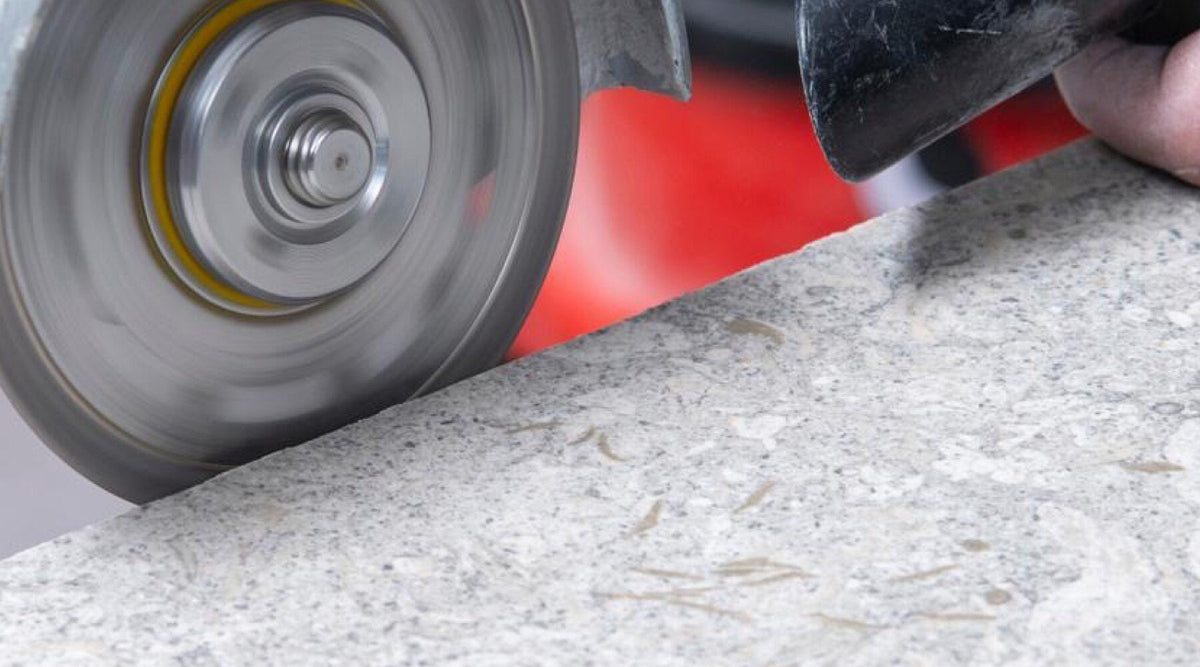
A diamond blade can still have plenty of segment remaining but begin cutting slowly, chipping the material or feeling as though it has stopped cutting altogether. This does not always mean that the blade is worn out.
One of the most common causes is glazing, but water delivery, cutting pressure, machine condition and using the wrong blade can also affect performance.
What Is Blade Glazing?
A diamond segment contains diamond particles held within a supporting bond. During normal cutting, this bond gradually wears and exposes fresh diamond.

Glazing occurs when the surface of the segment becomes smooth and the available diamond is no longer cutting effectively. The blade may still look usable, but its performance can noticeably decrease.
Common signs include:
• Slower cutting
• Increased pressure required to complete the cut
• Excessive heat
• Increased chipping
• A smooth or polished-looking segment surface
Check the Blade Before Use
Before inspecting, fitting or maintaining a blade, disconnect the machine from its power supply.
Inspect the blade carefully for:
• Cracks or deformation in the steel core
• Missing, loose or damaged segments
• Damage around the bore
• Uneven or excessive segment wear
• Any other visible defect

Do not use a damaged or deformed blade. A blade with cracked, loose or damaged segments must be removed from service.
Check That the Blade Is Correctly Installed
Confirm that:
• The blade is suitable for the material being cut
• The bore matches the machine spindle
• The blade is securely fitted between clean, undamaged flanges
• The direction arrow matches the machine’s rotation
• The machine speed does not exceed the maximum speed stated on the blade
• The blade runs centrally without visible movement or vibration
Diamond blades should never be left fitted to angle grinder due to the risk of damage in transit. Machine blades should not be left in water due to rust.
Check the Water Supply
An insufficient or uneven water supply can reduce cutting performance and cause excessive heat.
Water should reach both sides of the blade continuously throughout the cut. Check that the pump, pipes and outlets are clean and free from debris. Replace dirty water where necessary and ensure the pump is delivering an adequate flow.
Never begin cutting until the correct water supply has been established.
Do Not Force the Blade
Allow the blade to cut at a controlled, consistent rate. Excessive pressure will not necessarily make the blade cut faster and can increase heat, vibration, chipping and wear.
If the blade suddenly requires considerably more force, stop and investigate the cause rather than continuing to push it through the material. DO NOT cut curves or circles with any diamond blade. Diamond blades are for straight cuts only.
Dress the Blade When Required
If the blade is undamaged, correctly installed and receiving sufficient water but the segments have become glazed, the cutting edge may need dressing.
Use the supplied grindstone in accordance with the blade and machine instructions. Controlled cuts into the abrasive grindstone wear away a small amount of the segment bond and expose fresh diamond.
After dressing, inspect the blade again and test its cutting performance using an offcut of the intended material.
The grindstone is a maintenance aid; it must not be used to make a damaged or unsuitable blade usable.

Check the Machine
Blade performance can also be affected by the condition of the tile cutter. Check for:
• Worn or damaged bearings
• Movement in the cutting head
• A damaged spindle or flange
• Poor alignment
• Restricted water delivery
• Excessive vibration
• Incorrect operating speed
Keep the water tray, pump, guides and suitable moving components clean and properly maintained. BOSS PRO-MAX lubricant can be used as part of routine machinery maintenance on compatible moving components, following the machine manufacturer’s instructions.
Do not apply lubricant to the blade’s cutting edge, drive belts, electrical components or surfaces that could contaminate the tile.
When Should the Blade Be Replaced?
Stop using and replace the blade if:
• The steel core is cracked, bent or deformed
• A segment is cracked, missing, loose or damaged
• The bore is damaged
• The remaining segment has reached its safe wear limit
• The blade continues to vibrate or run incorrectly after the machine has been checked
• Cutting performance cannot be restored through correct setup and dressing
The BOSS Blades™ Approach
Correct blade selection, sufficient water, controlled cutting and regular maintenance all contribute to cutting quality and working life.
Every BOSS Blades™ diamond blade includes a complimentary Blade Essentials Pack containing a grindstone, HB pencil and disposable earplugs worth at least £10.
Share:
Diamond Blade Kerf Explained: When It Matters and How to Choose the Right Blade